Introduction to Glucosamine
Glucosamine has become one of the most widely discussed natural compounds in the context of joint health and mobility. Its popularity in supplement markets reflects both historical use and the significant research attention it has received in recent decades. Understanding glucosamine requires examining its origins, chemical properties, biological roles, and what contemporary research reveals about its effects.
What is Glucosamine?
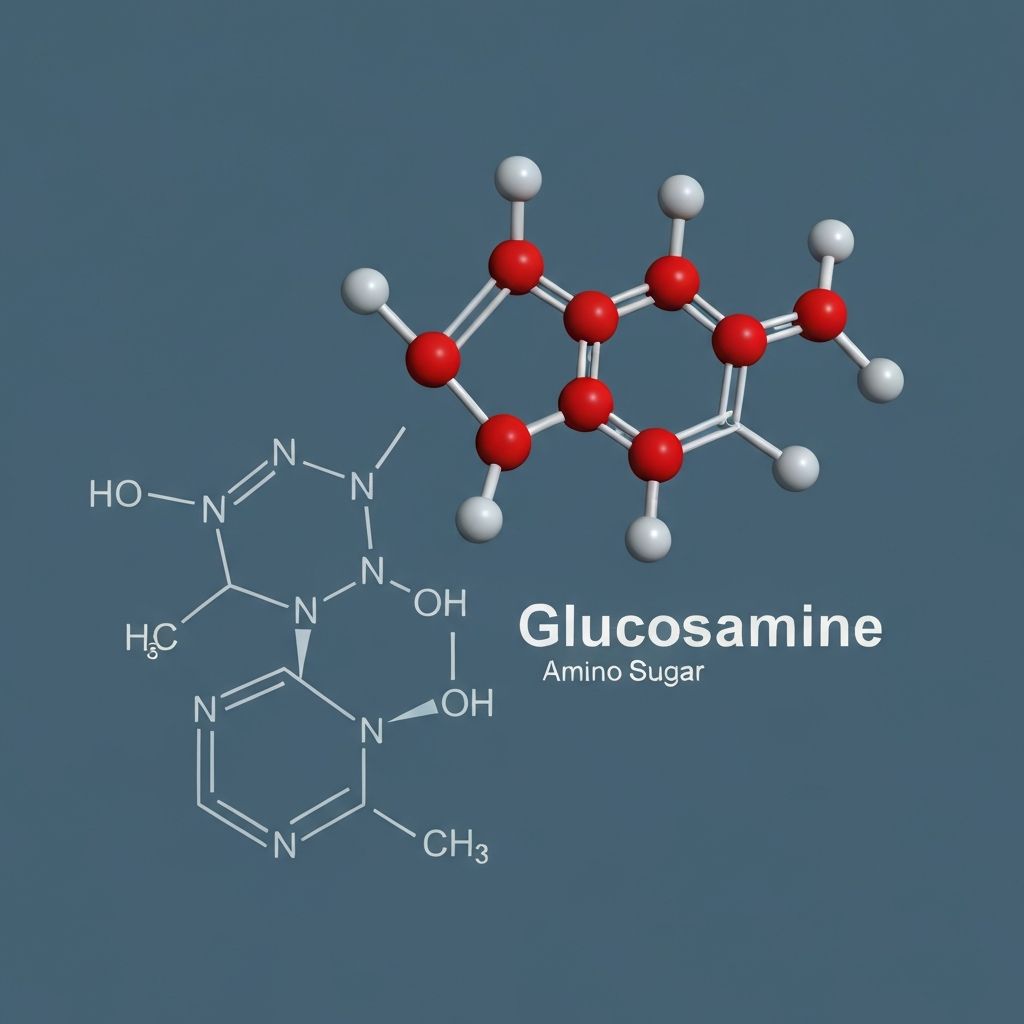
Glucosamine is a naturally occurring amino sugar—a molecule consisting of glucose (a simple sugar) bonded to an amino group. The chemical formula is C₆H₁₃NO₅. In its natural form within the body, glucosamine is found in various tissues, particularly in high concentrations in joint cartilage, where it's incorporated into the glycosaminoglycans and proteoglycans that constitute the extracellular matrix.
Glucosamine exists in several forms, the most common being glucosamine hydrochloride, glucosamine sulfate, and N-acetyl glucosamine (NAG). Each form has slightly different chemical properties and bioavailability characteristics. Glucosamine sulfate, in particular, has been the focus of much research due to its similarity to naturally occurring forms in the body.
Natural Sources and Origins
In nature, glucosamine is derived primarily from the exoskeletons of crustaceans—particularly shrimp, crab, and lobster shells. Traditional extraction methods involved grinding these shells and processing them to isolate the glucosamine content. This natural source remains the most common origin for commercial glucosamine supplements, though synthetic production methods also exist.
Plant-based sources of glucosamine are limited, as most plants contain very low concentrations. Some mushroom varieties contain small amounts of glucosamine. This makes crustacean-derived glucosamine the primary natural source, which creates considerations for individuals with shellfish allergies.
Glucosamine's Role in Joint Structures
Within joints, glucosamine is incorporated into glycosaminoglycans, particularly keratan sulfate and chondroitin sulfate. These large molecules are core components of proteoglycans, which are crucial structural elements in cartilage. Proteoglycans provide cartilage with its capacity to absorb and distribute compressive forces.
The glycosaminoglycans in cartilage are highly hydrophilic (water-attracting), allowing them to bind water molecules. This water content is critical to cartilage's mechanical properties. It provides the "gel-like" consistency that allows cartilage to compress under load and recover afterward. The role of glucosamine in forming these molecules is therefore relevant to cartilage's functional capacity.
Proposed Mechanisms of Action
Several mechanisms have been proposed for how supplemental glucosamine might influence joint function:
Substrate provision: The theory that supplemental glucosamine provides substrate (raw material) for synthesis of glycosaminoglycans, potentially supporting cartilage structure and repair.
Anti-inflammatory effects: Some research suggests glucosamine may influence inflammatory signaling pathways, potentially reducing inflammatory responses in joint tissues.
Cartilage protection: Proposals that glucosamine may inhibit enzymes that degrade cartilage matrix components, providing a protective effect on existing tissue.
Synovial fluid enhancement: Potential effects on synovial fluid composition or production, improving joint lubrication.
It should be noted that while these mechanisms are plausible based on biochemistry, the extent to which they actually occur in the body after oral supplementation remains an active area of research.
Historical Use and Traditional Application
Though glucosamine as a purified supplement is relatively modern, the use of substances derived from animal parts—particularly cartilage and connective tissues from animals—has deep historical roots in many traditional medicine systems. Bone broths and cartilage have been utilized for centuries in various cultures as part of nutritional and wellness practices.
The specific isolation and study of glucosamine as a distinct compound began in the mid-20th century, with research accelerating significantly in the 1980s and 1990s as supplement markets expanded and clinical research increased.
Contemporary Research Status
The research landscape regarding glucosamine is complex and sometimes contradictory. Numerous clinical trials have been conducted, with varying results. Large meta-analyses and systematic reviews have attempted to synthesize findings, with conclusions ranging from modest benefits to no significant effect.
Many early studies suggested glucosamine sulfate had benefits for joint-related discomfort and function. However, some more recent, large randomized controlled trials have found limited or no significant effects compared to placebo. This discrepancy may be due to several factors including study design variations, participant selection, outcome measurements, and dosage protocols.
Variables that influence research findings include: the specific form of glucosamine used (sulfate vs. hydrochloride), dosage (typically 1500mg daily in positive studies, though doses vary), duration of supplementation (benefits, if any, may require months of consistent use), population studied (effects may differ between individuals with different joint conditions), and the specific outcomes measured.
Current scientific consensus appears to be that while glucosamine is generally well-tolerated and some individuals report subjective benefits, strong evidence for substantial effects remains limited. Ongoing research continues to investigate specific populations, dosages, and formulations that might be more effective.
Bioavailability Considerations
An important consideration in glucosamine research is bioavailability—the degree to which oral glucosamine is absorbed and utilized by the body. When glucosamine is ingested, it must be absorbed from the digestive tract, distributed through the bloodstream, and then incorporated into tissues.
Some research suggests that oral glucosamine has relatively low bioavailability, with a significant portion being broken down during digestion rather than being absorbed intact. This has led some researchers to question whether oral glucosamine supplementation provides sufficient amounts of the compound to meaningfully influence joint tissue composition.
The glucosamine sulfate form includes sulfate, which may enhance absorption and potentially provides independent benefits. This may explain why some studies show more positive results with glucosamine sulfate compared to glucosamine hydrochloride forms.
Safety and Tolerability
Glucosamine supplements are generally considered well-tolerated with a good safety profile. Common side effects are minimal and typically mild, including gastrointestinal symptoms in some users. Individuals with shellfish allergies should be cautious with crustacean-derived glucosamine.
Conclusion
Glucosamine represents an interesting case study in how traditional knowledge, biochemical plausibility, and scientific research intersect. While the theoretical basis for glucosamine's effects is sound, and some individuals report subjective benefits, the scientific evidence remains mixed regarding objective effects on joint function and structure. Understanding glucosamine illustrates the importance of critical evaluation of research, consideration of individual variation, and realistic expectations regarding natural compounds and joint health.